
5 Daily Wellness Rituals Upgraded by Modern Health Technology
Most wellness routines don’t fail because people pick the wrong habits. They fail because the habits stay static while the science moves on. The five rituals mentioned in this article are likely to be the rituals of your mornings, days, and nights already – the only difference is what’s next to them. The same habits and the same 24 hours, but powered by a different engine.
Morning wake-up: light before noise
The regular alarm can be too drastic. It yanks you out of dreamland no matter what phase of sleep you’re in, and the blast of cortisol it elicits is more fight-or-flight than natural arousal.
Sunrise alarms do the opposite. They gradually increase light over 20 to 30 minutes up to your wake-up time, replicating the biological signal of the dawn that your forebears slowly geared up to over millions of years. The corresponding slow uptick in cortisol can have you waking up before your alarm clock gently nudges you to.
Instead of coming out of the deeper, dead-to-the-world REM cycle with a jams-on screech, you wake up in a lighter sleep phase, or potentially already there. The result is the easy alertness that humans are designed to feel in the morning, but that modern life with its bad lighting and dark winter mornings robs us of.
Hydration: what you drink versus what your cells absorb
Ensuring you are drinking enough water is a base level requirement, not really a performance goal. A more interesting goal is making sure that water is a particularly effective form, and one that gets absorbed and through cellular volume in an optimal way.
Molecular hydrogen (H2) is the smallest molecule. It crosses cell membranes and the blood-brain barrier without restriction. Once in the cell, it acts as a selective antioxidant, targeting the most harmful reactive oxygen species while leaving the beneficial ones intact. Which is more than you can say for a general antioxidant supplement.
Standard antioxidants can’t discriminate, so the effective ones can bring down your oxidative stress. But the ineffective ones won’t give you any of the benefits you were hoping for.
The practical upgrade here is booking in with a hydrogen infusion service. Providers such as H2 Pure Life offer sessions where drinking water is infused with molecular hydrogen at concentrations that can help reduce oxidative stress and support healthy cellular mitochondria. You’re drinking water. You’re just drinking something functionally different every time you do.
For anyone in training load, cognitive load or both, this is one of the more exciting, and less hippy-dippy interventions going around in the health and wellness space right now.
Meditation: from subjective to measurable
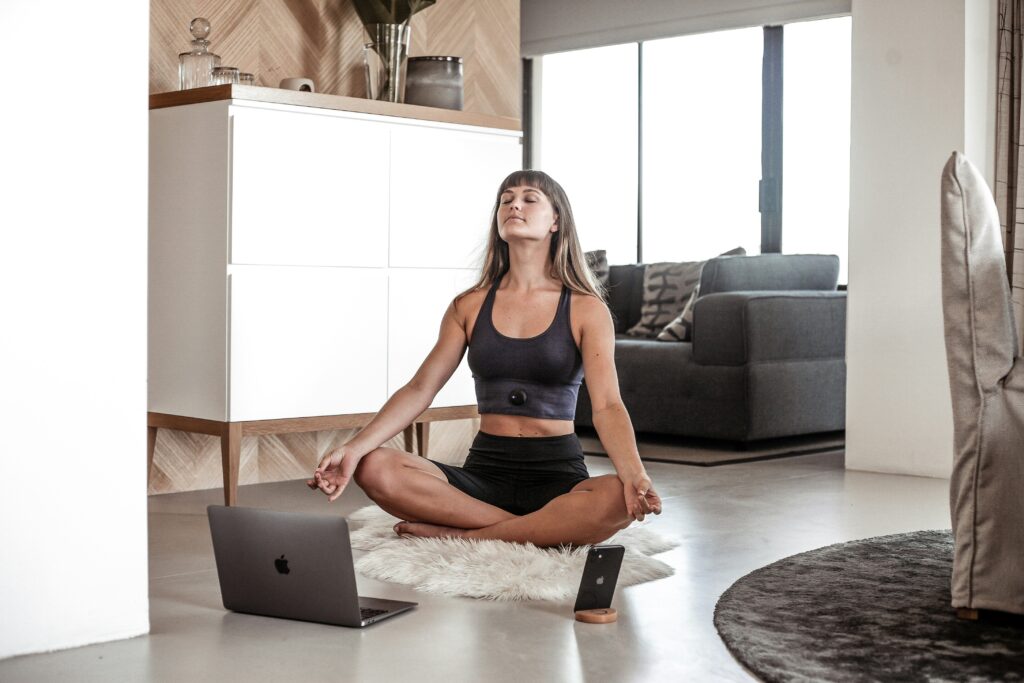
Many people struggle with meditation not because they lack motivation, but because they lack feedback. After a 20-minute session, you don’t know for sure if your nervous system shifted or if you just spaced out. EEG headbands and apps give you immediate feedback – you can see when your mind is genuinely settling into quiet versus when it’s just being quiet. HRV (heart rate variability) monitors, with standalone devices or ones integrated into wearables, measure your heart rate and give you a direct window into the state of your autonomic nervous system. A substantial increase in HRV during or after a session lets you know that your meditation is "working."
This objective data tells you that your nerves are relaxing, which is the whole point of the exercise. It’s training on and off the cushion or chair.
Mid-day movement: train hard or recover smart
One of the most frequent errors in fitness is pouring the same amount of sweat every day, regardless of what your physical state actually needs. Training hard while over-tired doesn’t create fitness; it creates fatigue and injury risk.
Wearables are beginning to address this issue by delivering recovery scores. These compile info about your sleep and how well you slept, your HRV, and your recent training stress to provide a number that estimates your readiness to train. If that score is good, go for it. If that score is low, the smartest choice for the day is active recovery – a long walk or some mobility and easy aerobic work, stuff that keeps you unstressed but in motion and encourages good capillary function to clear up waste products from previous stresses.
Sleep preparation: the evening environment
The quality of your sleep depends a lot on how you prepare for it. Temperature and light are the two most important factors to consider. Smart mattresses are now available that have active cooling or heating features, lowering the bed surface temperature. This helps your natural core body temperature decrease and thus activates and maintains the deep sleep cycle. On the other hand, blue light exposure during the evening is a major contributor to sleep disruption. A study published in the _Journal of Clinical Sleep Medicine_ revealed that melatonin production is reduced by 85% due to blue-enriched light exposure in the evening.
It might sound like a lot, but these are relatively easy fixes that don’t require too much of your willpower. They just need to be set up once and programmed to work on their own. This takes the effort element out of the equation.
The common thread
All these improvements don’t require you to do more. They require you to do what you’re already doing, but with better data and better results. That’s the kind of health and wellness technology upgrade to look out for.