
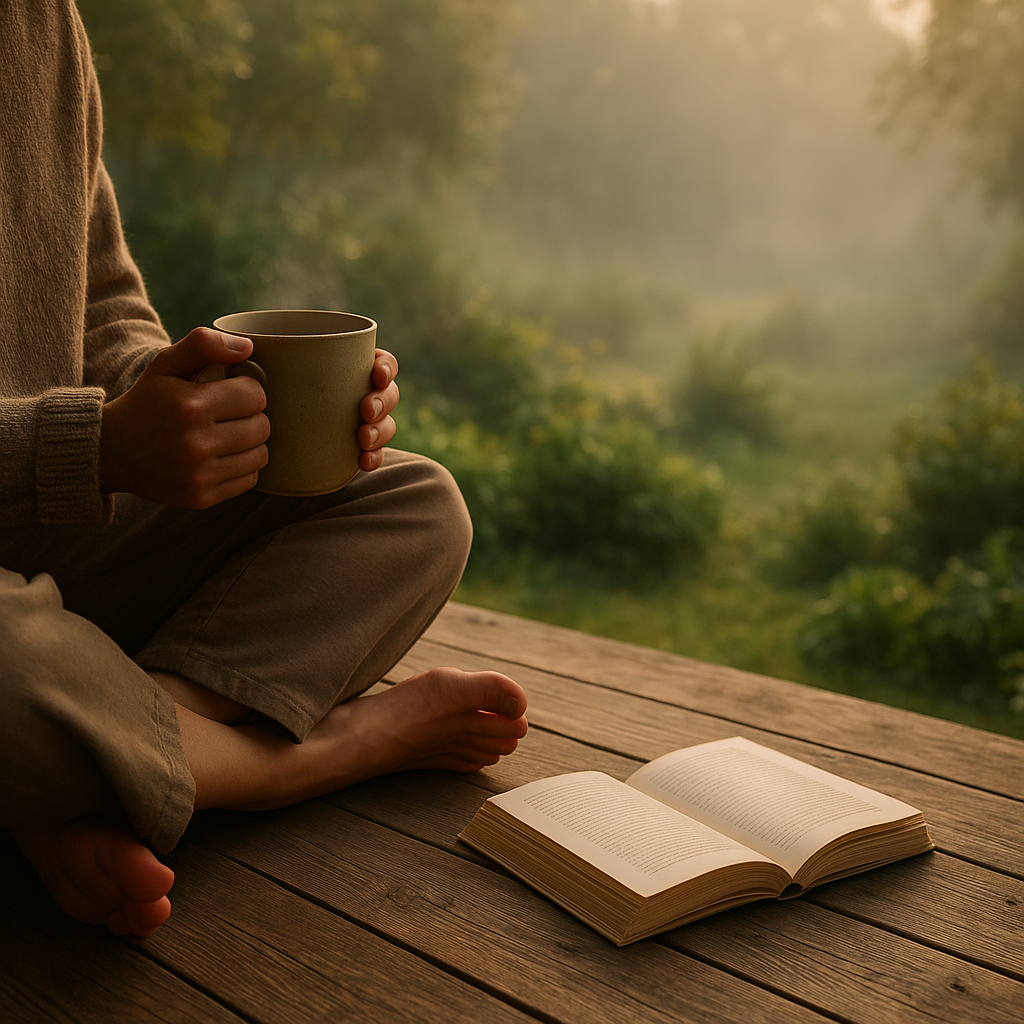
There’s a particular kind of exhaustion that no amount of sleep seems to fix. You know the one — where you wake up already dreading your notifications, gulp coffee while answering emails, and somehow arrive at Sunday evening wondering where the weekend went. For millions of people, this isn’t an occasional rough patch. It’s just… life. And somewhere along the way, we accepted it as normal.
But what if it doesn’t have to be? What if the relentless pace we’ve built our lives around isn’t progress at all, but a trap? That’s the quiet, compelling argument behind slow living — a philosophy that’s gaining serious traction in a world that never seems to stop accelerating.
This isn’t about being lazy or dropping out of society. It’s about something far more radical: being intentional with your time, your energy, and your attention. And the more you look at it, the harder it becomes to argue against.
What Is Slow Living, Really?
Slow living is a lifestyle philosophy centered on doing things at the right pace rather than the fastest pace. It grew out of the Slow Food movement that emerged in Italy in the late 1980s, when Carlo Petrini famously protested the opening of a McDonald’s near the Spanish Steps in Rome. His argument was simple: food made and eaten with care is better — for your health, for communities, and for culture — than food made purely for speed and convenience.
That same logic expanded outward. If food is better when it’s given proper attention, why not work? Why not relationships? Why not mornings, weekends, and entire seasons of your life?
Today, slow living encompasses a broad set of practices and values:
- Prioritizing quality over quantity in how you spend your time
- Being fully present in daily activities rather than rushing through them
- Reducing unnecessary consumption — of goods, media, and commitments
- Reconnecting with nature, community, and creative work
- Making deliberate choices rather than defaulting to whatever’s convenient or expected
It’s worth noting that slow living doesn’t look the same for everyone. For a parent in a busy city, it might mean cooking one real meal together as a family each week and putting phones away during it. For someone else, it might mean leaving a high-stress career to pursue something quieter. The philosophy is flexible — what matters is the intention behind it.
The Key Principles of Slow Living
If you’re wondering what the key principles of slow living actually are, they tend to cluster around a few core ideas.
Intentionality
Slow living asks you to examine your choices rather than making them on autopilot. Why do you have the schedule you have? Are your commitments actually aligned with what you value, or did you just never stop to question them? Intentionality is about deciding what gets your time and energy — rather than letting habit, social pressure, or algorithm decide for you.
Presence
Perhaps the most recognizable element of slow living is the emphasis on being genuinely present. This sounds obvious until you realize how rarely it happens. Research from Harvard University found that people spend about 47% of their waking hours thinking about something other than what they’re currently doing — and that mind-wandering consistently correlates with lower happiness, regardless of the activity. Slow living is, in part, a direct counter to this drift.
Simplicity
This doesn’t mean minimalism necessarily (though it can). Simplicity in slow living means removing complexity that doesn’t serve you — whether that’s a cluttered home and daily routine, a packed social calendar, or a 47-tab browser situation. The goal is to create enough space that the things that actually matter can breathe.
Connection
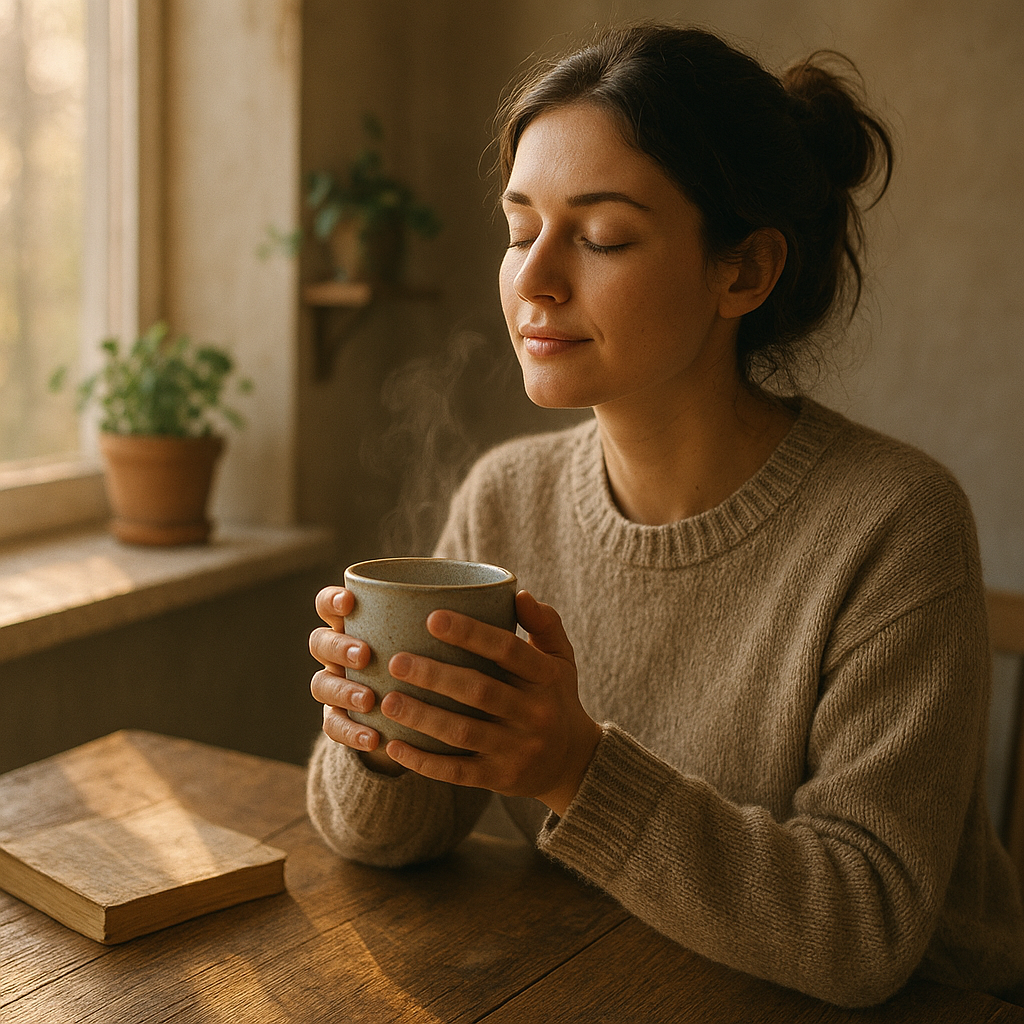
Slow living places enormous value on genuine connection — with other people, with the natural world, and with yourself. This is increasingly rare in a culture where most social interaction is mediated by screens and optimized for engagement rather than depth.
What Are the Benefits of Living a Slow Life?
The benefits of slow living aren’t just philosophical — there’s a growing body of research backing up what slow living advocates have been saying for decades.
Mental health improvements are among the most consistently reported benefits. Chronic stress is now recognized as a major contributor to anxiety, depression, and burnout. The American Institute of Stress estimates that 77% of people regularly experience physical symptoms caused by stress, and 73% report psychological symptoms. Slowing down — genuinely, not just taking a vacation and returning to the same frenetic pace — creates the conditions for the nervous system to actually recover.
Better physical health follows. When we’re less stressed and more present, we tend to eat better, sleep more consistently, move our bodies in ways that feel good rather than punishing, and make healthier choices generally. A slower pace also correlates with lower cortisol levels, reduced blood pressure, and improved immune function.
Deeper relationships are another significant benefit. When you’re not perpetually distracted or exhausted, you show up differently for the people in your life. Conversations go deeper. You notice more. You’re actually there, not physically present while mentally three tasks ahead.
Increased creativity and productivity might seem counterintuitive, but research consistently shows that rest, boredom, and unstructured time are essential for creative thinking. Cal Newport, author of Deep Work, argues that the ability to focus without distraction is becoming one of the rarest and most valuable skills in the modern economy — and it’s precisely the kind of capacity that slow living nurtures.
Greater life satisfaction is perhaps the most personally compelling benefit. Studies on the psychology of happiness repeatedly find that experiences outperform possessions, presence outperforms productivity, and meaning outperforms achievement in terms of lasting wellbeing. Slow living is essentially a practical system for prioritizing all of those things.
Why Does Gen Z Choose Slow Living?
Here’s something interesting: slow living has found an unexpected home with Gen Z, the generation that grew up entirely online. You might expect digital natives to be the most enthusiastic participants in hustle culture, but in many ways, the opposite is true.
Gen Z has watched older generations grind themselves into the ground chasing stability that never quite materialized — and they’re asking whether the trade-off is actually worth it. They entered adulthood during a global pandemic, which forced a collective confrontation with questions about what actually matters. They’re also the first generation to have social media’s impact on mental health documented in real time, and many of them are actively pushing back against it.
Trends like “bed rotting,” “soft living,” and “quiet quitting” get mocked in headlines, but underneath the surface-level noise, they represent something more substantive: a genuine generational skepticism about the idea that productivity is inherently virtuous, that busyness signals worth, and that life should be optimized rather than experienced.
It’s also worth noting that Gen Z is, statistically, one of the most anxious generations ever measured. The slow living movement offers something that resonates: permission to step off a treadmill that was never theirs to begin with.
What Are the Benefits of a Modern Lifestyle — And What Does It Cost?
To be fair, the modern lifestyle has delivered extraordinary things. Unprecedented access to information, medical advances, global connection, convenience that previous generations couldn’t have imagined. These aren’t trivial. The argument for slow living isn’t that modernity is all bad — it’s that we’ve accepted certain costs without fully examining them.
The cost of always-on connectivity is a nervous system that rarely gets to fully rest. The cost of relentless productivity culture is that rest becomes guilt-laden rather than restorative. The cost of convenience-first living is often a creeping disconnection from the processes that give life texture and meaning — cooking, making, repairing, growing.
Slow living doesn’t require rejecting modern life wholesale. It’s more about developing a conscious relationship with it — using what genuinely serves you, and letting go of what doesn’t.
Practical Ways to Start Living More Slowly
If this resonates but feels abstract, here are some concrete entry points. None of them require a dramatic life overhaul.
- Protect your mornings. Resist the urge to check your phone first thing. Even 20-30 minutes of slow, screen-free time before the day gets loud can change your entire baseline for the day. A structured morning routine can help you build this habit consistently.
- Cook something from scratch regularly. It doesn’t have to be elaborate. The act of preparing food — chopping, stirring, tasting — is one of the most grounding, present-tense activities available to most people.
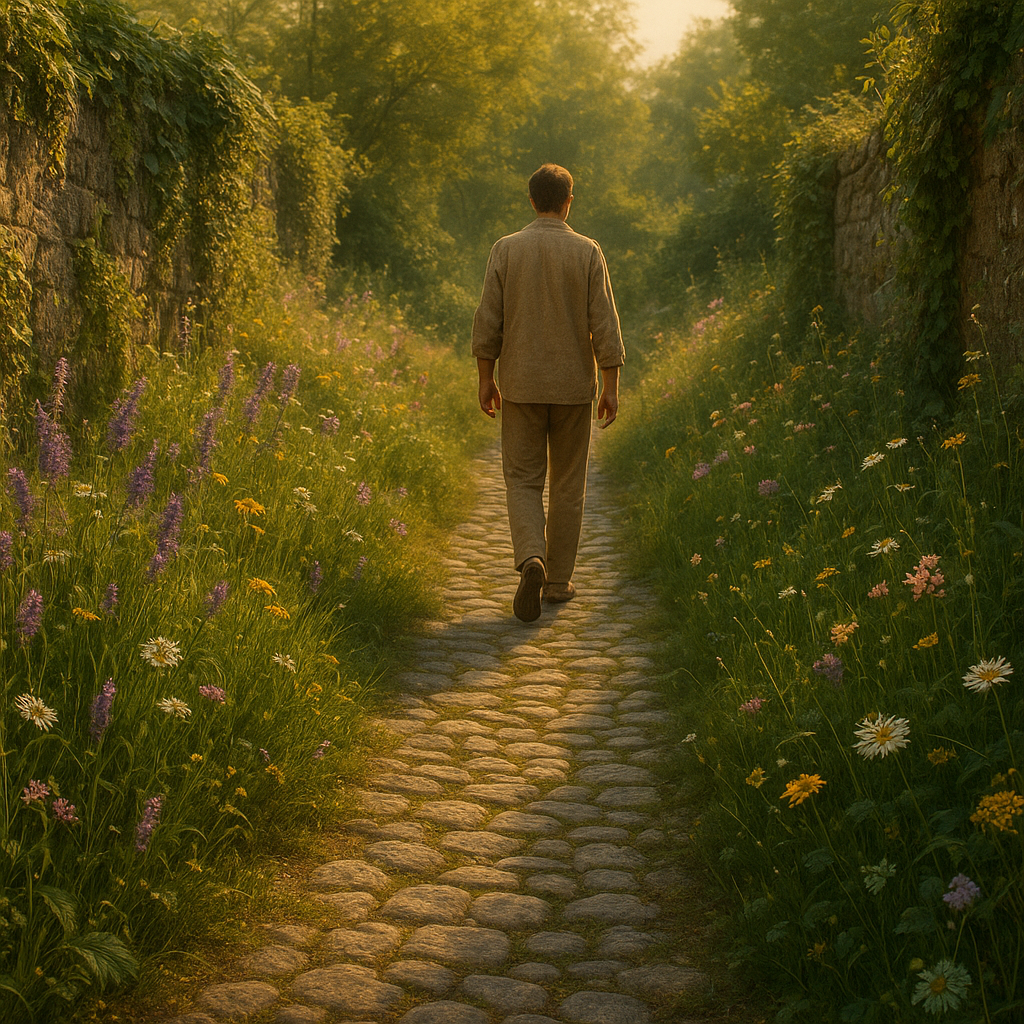
- Schedule genuine rest. Not “collapse from exhaustion” rest, but intentional downtime with no agenda. A walk without headphones. Sitting in a garden. Reading a physical book.
- Audit your commitments. Write down everything that regularly claims your time and energy. Ask honestly which ones align with your values and which ones you’re doing out of obligation or inertia.
- Eat without distraction at least once a day. No screens, no scrolling. Just the food, the flavors, and whoever else is at the table with you.
- Create transition rituals. Small habits that signal a shift between modes — ending the workday with a short walk, or making tea before sitting down to read — help prevent the blur where everything bleeds into everything else.
- Spend time in nature regularly. Research consistently shows that time in natural environments reduces cortisol, lowers heart rate, and restores attentional capacity. Even a park counts.
A Different Definition of a Life Well-Lived
At its core, slow living invites a fundamental question: What is a good life, actually? Not according to your LinkedIn profile or your productivity app — but according to you, when you’re honest with yourself.
Most of us, if we sit quietly enough to hear the answer, don’t say we want to have been more efficient. We say we want to have been more present. To have loved people well. To have noticed things. To have made things. To have had enough time to actually enjoy the life we worked so hard to build.
Slow living is the practical pursuit of that answer. And in a world that profits enormously from your distraction, your exhaustion, and your disconnection, choosing to slow down is — quietly, undramatically — a radical act.
Conclusion
The slow living movement isn’t a rejection of ambition or a romanticization of the past. It’s a recalibration — a deliberate choice to measure life by depth rather than speed, by presence rather than productivity, by meaning rather than output. Its benefits are well-documented: reduced stress, better health, deeper relationships, greater creativity, and a more authentic sense of wellbeing. It resonates across generations precisely because the hunger for something more intentional is widespread, even if it’s rarely named.
Starting slowly — with small, consistent choices rather than sweeping transformations — is usually the most sustainable approach. Protect your mornings. Cook real food. Create space for genuine rest. Question which commitments actually align with what you value. None of this is complicated. But in a culture that mistakes busyness for meaning, it takes real courage to try.